
Did you know that companies that switch to a service-led model report up to a 20% lift in repeat revenue within a year? I open with that because the way you run field ops matters as much as the tech you buy.
I define service management in plain English: it’s the blueprint I use to run reliable HVAC work from first call to invoice. I tie people, parts, processes, and software into one system so your business can deliver consistent visits on time, even when traffic or parts delays happen.
This guide is practical and beginner-friendly. I walk you through the full lifecycle so you’re never guessing which step comes next or which metric tells you if things are working.
Expect clear coverage of field operations, scheduling optimization, contact center work, and parts and repair. My goal is better customer experience, fewer manual tasks, faster response, and clearer information for smarter decisions.
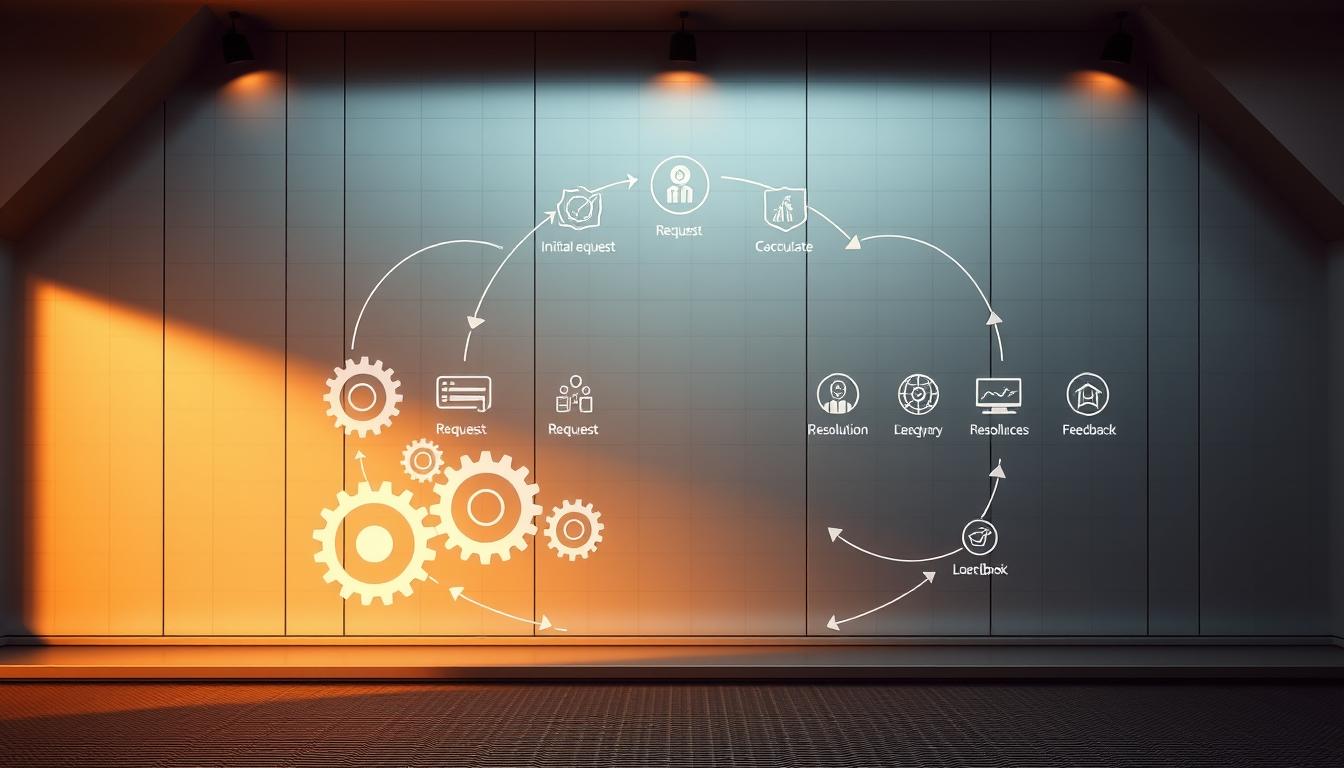
Key Takeaways
- A clear lifecycle ties people, parts, and software into consistent HVAC delivery.
- Scheduling and planning reduce missed windows and improve first-time fixes.
- Contact center alignment speeds responses and raises customer satisfaction.
- Parts and repair focus cuts downtime and lowers repeat visits.
- Using proven frameworks helps translate ideas into everyday HVAC actions.
What I’ll help you master right now: goals, audience, and how this guide improves your HVAC service operations
I’ll help you set clear goals and simple steps that improve how your HVAC teams respond today. My aim is to make changes you can try the same day and measure the next week.
Who this beginner’s guide is for in the United States
I wrote this for owners, service managers, dispatchers, and new coordinators at U.S.-based HVAC companies. If you want practical, jargon-free guidance, this is for you.
How I’ll align your business needs with practical steps today
I show how to centralize requests, tasks, and updates so users and teams share one source of information. That reduces lost tickets and duplicated work.
I also cover quick wins: clarify roles, set automated routing and notifications, and give technicians easy access to job details. These steps cut friction between dispatch and field staff and improve the customer experience.
Service management: what it is and why it matters today
I define service management as the practical system I use to coordinate people, tools, and processes so every visit delivers clear value to the customer.
Plain-English definition and the “value to customers” focus
Put simply, it means we carry the complexity so customers get a reliable outcome without extra risk or cost. ITIL calls this delivering value by enabling outcomes; I translate that into schedules that work and fixes that stick.
Why services build loyalty and resilience for organizations
Ongoing services create a steady conversation with customers so we learn and adapt fast. That continual improvement loop—capture feedback, adjust, repeat—keeps the business resilient when demand shifts.
Using light-touch itsm and proven frameworks brings benefits beyond the job site: better margins, predictable schedules, stronger communication, and fewer escalations. Small teams use repeatable processes and shared knowledge to raise the customer experience without bloated software or rigid rules.
The service lifecycle made simple: strategy, design, transition, operation, and improvement
I map five stages that keep customer needs, parts, and people aligned from first call to finish. This simple lifecycle links goals to daily work so every visit has a clear purpose and measurable value.
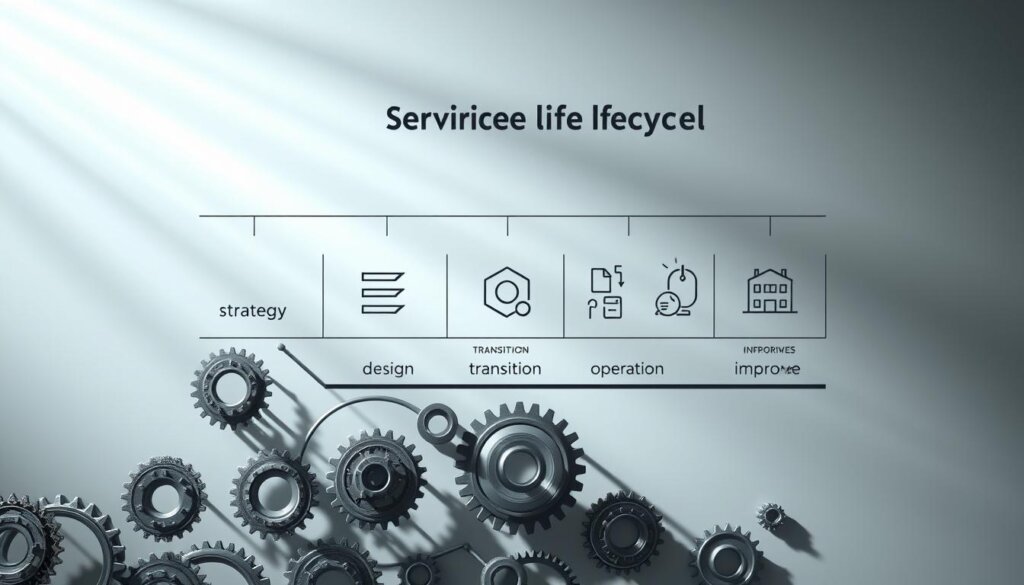
Service strategy
I tie strategy to business needs and customer journeys so each offering has a target outcome. That means defining who the user is, which capabilities matter, and what value success looks like.
Service design
Design focuses on processes, SLAs, required skills, and service delivery requirements. I keep handoffs tight so parts, people, and schedules match real-world constraints.
Service transition
Transition is about change and readiness. I validate knowledge, test workflows, and confirm go-live criteria so launches feel controlled, not chaotic.
Service operation
Operations covers request management for routine asks, incident management for break-fix, and problem work for repeat faults. Continuity planning keeps delivery steady during disruptions.
Continual improvement
I use PDCA and a few visible metrics—first-time fix, response time, and schedule adherence—to drive improvement. Light-weight frameworks like ITIL help keep the loop disciplined without slowing teams.
Translating the lifecycle to HVAC: a practical map from call to completion
I walk you through a practical map that turns each incoming call into a predictable job outcome. My focus is on clear intake, reliable dispatch, and tight closeout so your crews and customers know what to expect.
From request intake to dispatch and onsite work
I map HVAC work from the first request to job completion: intake, triage, dispatch, travel, onsite diagnosis, repair, paperwork, and follow-up. This sequence makes daily operations feel predictable and reduces wasted time.
I set up intake channels and standard tasks so teams capture the right information once. That improves schedule quality and raises first-time fix rates.
Linking SLAs, parts availability, and technician capabilities
I match SLAs to business needs and factor parts availability into planning before dispatch. Checking stock and alternates early protects first-time fixes and avoids return visits.
I connect technician capabilities with job requirements and enable mobile access to past work, warranties, and diagrams. I automate confirmations, status updates, and job-ready checklists so your staff spends less time chasing information and more time delivering value.
ITSM to ESM: applying proven frameworks across your enterprise
I translate industry frameworks into practical rules you can use across the company.
ITSM ideas like lifecycle thinking and shared processes bring clarity when you scale. I explain core choices so leaders can pick the right blend for their organization without heavy overhead.
ITIL, COBIT, ISO/IEC 20000, and YaSM in a nutshell
ITIL gives a service value system and practical practices for delivery. I use it as a reference for lifecycle and day-to-day operations that fit HVAC work.
COBIT adds a governance lens. It helps leaders align controls and accountability with business outcomes in plain language.
ISO/IEC 20000 defines a formal system and lets organizations show maturity through certification when that makes sense.
YaSM is a lightweight process model with editable templates if you want structure without heavy process weight.
My advice: start small, keep knowledge and processes common across teams, and document more only where risk or scale demands it. That way the entire enterprise benefits from consistent, repeatable approaches that speed onboarding and reduce silos.
Field Service Management and Planning & Scheduling Optimization for faster, reliable delivery
My focus is on planning and schedules that cut travel time and raise first-time fixes. I combine mobile-first workflows with live scheduling and scenario planning so operations feel predictable on the day of the job.

Mobile-first workflows: technicians, assets, warranties, and invoices
I set up mobile tools so technicians carry asset history, warranty notes, quotes, and invoice tools in their pocket. This reduces paper, speeds turnaround, and lets crews finish tasks without returning to base.
That change alone often cuts admin time and improves on-site delivery because teams capture the right data at the point of work.
Real-time scheduling: right skills, right parts, right time
I configure scheduling to match skills, parts, and location in real time. The system prioritizes technicians who can complete the job and checks stock before assignment.
Optimization reduces windshield time, keeps SLAs, and improves arrival accuracy for happier customers and more productive teams.
Scenario planning: “what if” capacities and seasonal spikes
I build scenario tests so you can simulate workforce changes, large contracts, or peak seasons. These what-if runs reveal which policies, overtime, or stocking shifts deliver the best efficiency gains.
Dashboards then show on-time arrival, first-time fix, and backlog so leaders can act where the data matters most.
Contact center and customer engagement: omnichannel support that feels effortless
I build omnichannel hubs that turn scattered requests into a single, actionable queue for field teams. The point is simple: fewer handoffs, clearer priorities, and faster outcomes for users and crews.
Unified request management: phones, chat, email, portals
I unify phones, chat, email, and customer portals into one queue so your team works from a single system with full visibility. That reduces lost tickets and duplicate work, and it makes routing accurate from the first touch.
I standardize intake fields to capture key details up front. This helps technicians arrive ready and raises first-contact resolution rates.
Automation, AI, and knowledge to boost first-contact resolution
I use automation and AI to auto-classify urgency, category, and sentiment so tasks go to the right person fast. Bots handle simple queries and a growing knowledge base powers self-service for customers who prefer to solve issues themselves.
For incidents that need human attention, I separate incident management from routine requests. Agents use trusted knowledge articles, templates, and collaboration tools to resolve calls quickly while keeping the experience effortless for the user.
Parts and repair management: inventory, reverse logistics, and depot excellence
Getting the right part to a technician fast is the small move that prevents big delays. I treat parts as a workflow, not a stockroom, so every handoff reduces downtime and preserves trust.
Stock visibility and third-party supply coordination
I maintain clear visibility across vans, warehouses, and depots so planners know what exists before they schedule. That visibility ties into third-party suppliers with reorder points and approved alternates.
When a critical product is scarce, I route jobs to locations with stock or swap in an approved alternate. This keeps delivery steady and protects first-time fix rates.
Returns, exchanges, and turnaround time that wow customers
I design simple reverse-logistics flows for returns, assessments, exchanges, and depot repairs. Each step captures serials, condition, and warranty data so claims and costs are accurate.
I also link part availability to scheduling and dispatch. Using lightweight technology reduces manual steps and gives teams real-time information on shipments and depot work.
Bottom line: good parts processes save time, sharpen operational efficiency, and make customers notice the difference in every visit.
Choosing service management software: what I look for to fit your organization
A platform only helps when it fits how people actually work in the field and office. I start by mapping current processes and business needs so the software complements your workflow instead of replacing it overnight.
Centralized information, collaboration, and dashboards
I prioritize systems that centralize information across field, planning, contact, and parts teams. Shared dashboards and real-time data let everyone see the same truth and act on it quickly.
Collaboration tools—comments, attachments, and clear handoffs—cut follow-up calls and speed resolution.
Automation that eliminates redundant tasks and saves time
I look for automation that handles routing, notifications, and routine updates. That reduces repetitive tasks so users can focus on solving problems and improving delivery.
Out-of-the-box request flows and incident practices speed adoption and prevent reinventing basic work.
Scalability, security, and alignment with your current processes
I validate that field, scheduling, contact, and parts modules work as one cohesive system, not separate tools that create extra steps. Role-based access and security should scale with your business.
I involve dispatch, technicians, contact staff, and parts teams early and plan implementation in phases to protect time-to-value and win executive sponsorship.
Conclusion
A deliberate approach to how you run field work turns everyday tasks into repeatable wins. I argue that solid service management aligns offerings with business goals, clears up roles, and stops redundant work from slowing teams down.
Start small: tidy request flows, simple dashboards, and one automation to remove a choke point. Those steps drive real benefits—faster response, fewer repeat visits, clearer communication, and a better customer experience at scale.
Keep information centralized so your team shares one view of work. Measure a few meaningful metrics like first-time fix, on-time arrival, and resolution speed, and iterate with steady improvement. Apply one change today and let momentum build the rest of the way.
See how FieldAx can transform your Field Operations.
Try it today! Book Demo
You are one click away from your customized FieldAx Demo!
FAQ
Who is this HVAC lifecycle guide intended for in the United States?
I wrote this guide for facility managers, small HVAC business owners, operations leads, and frontline supervisors who want clear, practical steps to improve field work, customer requests, and team coordination. If you handle dispatch, parts, or tech scheduling, this fits your role.
How will this guide help my HVAC business right away?
I focus on immediate wins: cleaner request intake, faster dispatch, better parts planning, and metrics that show value. You’ll get actionable approaches to reduce repeat visits, improve first-time fixes, and align tech skills with customer needs.
What do you mean by the lifecycle and why should I care?
The lifecycle maps every step from planning to continuous improvement. I explain how strategy, design, transition, operation, and improvement work together so you deliver consistent results, lower costs, and earn customer loyalty.
How does tying work to customer journeys change outcomes?
When I link tasks to customer expectations, teams prioritize correctly and craft processes that meet real needs. That reduces complaints, shortens response times, and builds trust across service touchpoints.
What are the most important processes for daily operations?
Focus on intake, dispatch, incident handling, parts coordination, and technician enablement. I show how to streamline request handling, manage incidents quickly, and keep replacement parts flowing to job sites.
How can I improve first-contact resolution for HVAC calls?
I recommend better knowledge access, proper triage scripts, remote troubleshooting steps, and ensuring technicians have the right parts and skills assigned. Automation and centralized information cut repeat visits.
Which standards and frameworks should I consider for wider adoption?
I cover practical uses of ITIL, ISO/IEC 20000, COBIT, and YaSM so you can pick elements that match your size and goals. You don’t need full certification to benefit—apply core practices that boost consistency and governance.
How do I optimize scheduling to handle seasonal spikes?
Use real-time capacity planning, skill-based routing, and scenario modeling. I explain how to balance technicians, prioritize urgent requests, and plan temporary staffing to handle peak demand without losing service quality.
What should I look for in field tools and mobile apps?
I look for offline capability, asset history, parts tracking, warranty details, and simple invoicing. The right app keeps techs informed, speeds repair completion, and improves billing accuracy.
How can automation and AI help my contact center?
Automating routine tasks, using chat and voice bots for triage, and providing smart knowledge prompts to agents raise first-contact resolution and free staff for complex issues. I focus on practical automation that supports human judgment.
What are quick wins for parts and inventory control?
Start with stock visibility, reorder thresholds, and preferred vendor rules. I advise simple reverse-logistics for returns and kits for common repairs to reduce downtime and speed repairs.
How do I measure improvement and show ROI?
Track response time, first-time fix rate, parts turnover, technician utilization, and customer satisfaction. I recommend small, regular reviews using these KPIs to prove gains and guide continuous improvement.
How can I scale processes without replacing my current systems?
I suggest integration-first approaches: add middleware or APIs to centralize data, automate handoffs, and build dashboards. That keeps your existing tools while unlocking collaboration and visibility.
What training matters most for technicians and support staff?
Focus on diagnostic skills, customer communication, parts identification, and using mobile tools. Short, scenario-based refreshers work better than long classroom sessions for retention and performance.
How do I handle warranty and vendor coordination smoothly?
Capture warranty details at intake, match parts to vendor terms, and automate claims where possible. I recommend clear SLA rules and a single point of contact to speed approvals and returns.
Author Bio

Co-Founder & CMO at Merfantz Technologies Pvt Ltd | Marketing Manager for FieldAx Field Service Software | Salesforce All-Star Ranger and Community Contributor | Salesforce Content Creation for Knowledge Sharing