HVAC liquid line
A liquid line is an important part of an HVAC system. It carries refrigerant from the condenser to the expansion device, helping maintain the refrigerant flow required for the cooling process.
To understand the liquid line, it helps to first understand how refrigerant travels through an HVAC system.
Basic Refrigeration Cycle:
Compressor → Condenser → Liquid Line → Expansion Device → Evaporator → Suction Line → Compressor
The liquid line is located between the condenser and the expansion device. Although it may look like a simple copper pipe, it plays an important role in maintaining the proper operation of the refrigeration cycle.
What Is a Liquid Line in HVAC?
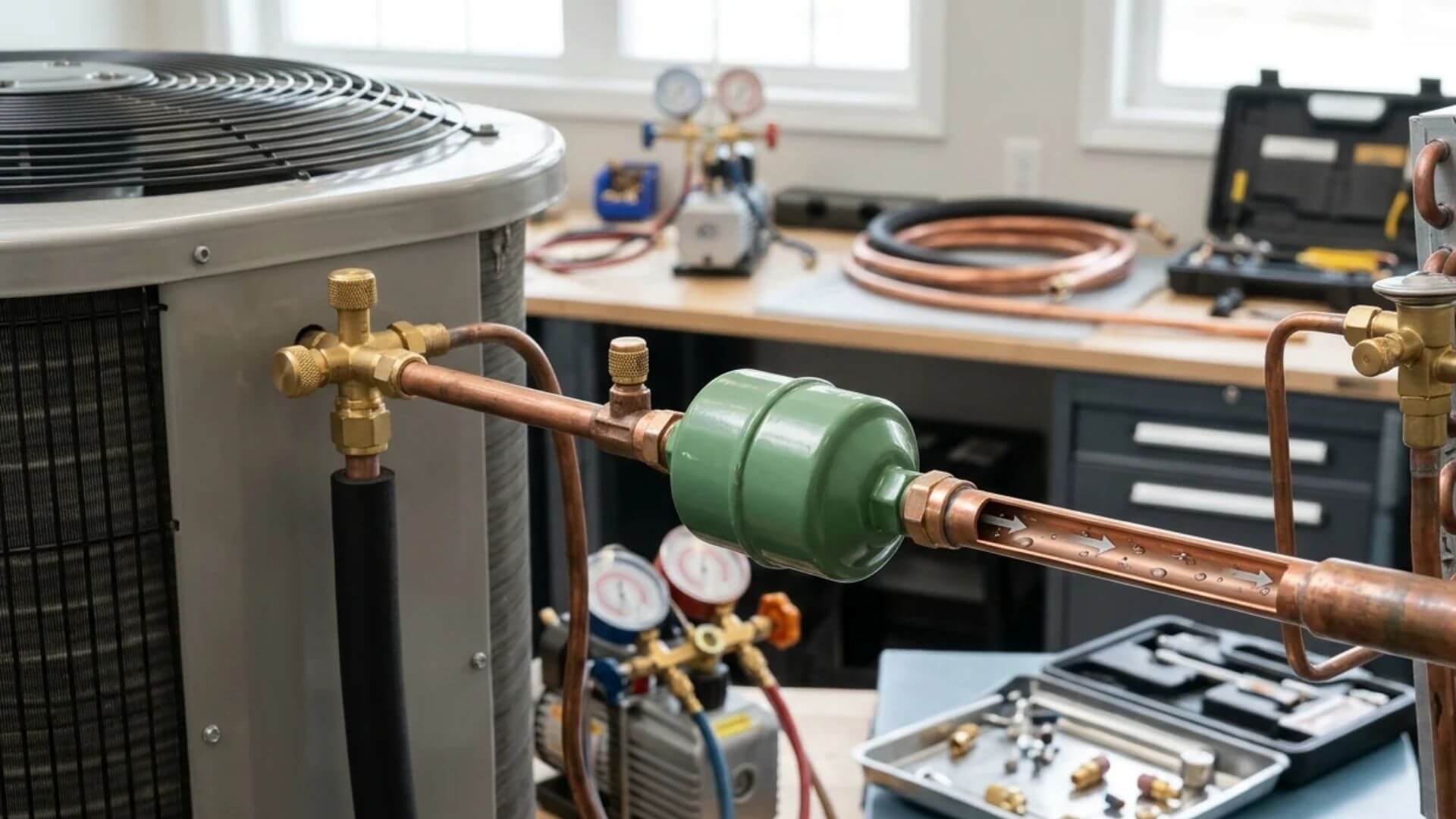
The liquid line is a refrigerant pipe that carries high-pressure liquid refrigerant from the condenser to the expansion device.
Inside the condenser, the refrigerant releases heat to the surrounding air or water. As it loses heat, the refrigerant changes from vapour into liquid.
The liquid line then transports this refrigerant to the expansion device, where its pressure is reduced before it enters the evaporator.
In simple terms:
- Condenser: Releases heat and changes refrigerant vapour into liquid.
- Liquid Line: Carries liquid refrigerant towards the expansion device.
- Expansion Device: Reduces refrigerant pressure before it enters the evaporator.
- Evaporator: Absorbs heat from the surrounding area to provide cooling.
Where Is the Liquid Line Located?
The liquid line is located between the condenser and the expansion device.
In a typical split air conditioning system, it is one of the two refrigerant copper pipes connecting the indoor and outdoor units.
It is generally smaller in diameter than the suction line. While the suction line carries low-pressure refrigerant vapour back to the compressor, the liquid line carries high-pressure liquid refrigerant towards the expansion device.
Understanding the difference between these two lines helps technicians identify their functions during installation, inspection, and maintenance.
How Does the Liquid Line Work?
The liquid line works as a passage for refrigerant after it leaves the condenser.
Here is how the process takes place:
- Heat Removal: The condenser removes heat from the refrigerant and converts it into a liquid.
- Refrigerant Transportation: The liquid line carries the high-pressure liquid refrigerant towards the expansion device.
- Pressure Reduction: The expansion device reduces the refrigerant pressure and controls its flow into the evaporator.
- Cooling Process: The refrigerant absorbs heat inside the evaporator and changes into vapour.
For the system to operate properly, the liquid line must deliver refrigerant to the expansion device under suitable pressure and temperature conditions.
Why Is the Liquid Line Important?
The liquid line helps maintain the proper flow of refrigerant throughout the HVAC system.
If the liquid line develops a problem, refrigerant may not reach the expansion device under the required conditions. This can affect the cooling process and overall system performance.
A properly designed and installed liquid line helps:
- Transport refrigerant efficiently.
- Maintain suitable refrigerant pressure.
- Reduce unnecessary pressure loss.
- Deliver liquid refrigerant to the expansion device.
- Support reliable cooling performance.
Subcooling means cooling liquid refrigerant below its saturation temperature at the corresponding pressure. It helps ensure that the refrigerant remains in liquid form as it travels through the liquid line towards the expansion device.
Common Liquid Line Problems
Like other HVAC components, liquid lines can develop problems over time due to installation issues, wear, damage, or operating conditions.
Some common problems include:
1. Blockages or Restrictions
Dirt, debris, a restricted filter drier, or damage inside the piping can reduce refrigerant flow.
When refrigerant flow becomes restricted, the system may experience abnormal pressure and temperature conditions. This can affect the expansion device and reduce cooling performance.
2. Refrigerant Leaks
Leaks can develop due to corrosion, damaged copper pipes, loose connections, or poor installation.
When refrigerant escapes from the system, the available refrigerant charge decreases. This can affect system pressure, cooling capacity, and overall efficiency.
Technicians should inspect pipe connections and accessible sections of the liquid line for signs of leakage.
3. Excessive Heat Gain
The liquid line can absorb heat from its surrounding environment, especially when exposed to high temperatures.
Excessive heat gain can reduce subcooling. Under certain conditions, this may cause some liquid refrigerant to turn into vapour before reaching the expansion device.
This condition can interfere with the proper operation of the refrigeration system.
4. Pressure Drop
Pressure drop occurs when refrigerant loses pressure while travelling through the liquid line.
Long piping runs, incorrect pipe sizing, excessive bends, or restrictions can contribute to pressure loss.
If the pressure drops too much, some refrigerant may change into vapour before reaching the expansion device, affecting its performance.
These problems can contribute to poor cooling, reduced system efficiency, and unstable operation.
Signs of Liquid Line Problems
Identifying possible liquid line problems early can help technicians investigate issues before they become more serious.
Some signs that may indicate a liquid line issue include:
- Reduced cooling performance.
- Unusual temperature differences along the refrigerant piping.
- Abnormal refrigerant pressure readings.
- Visible oil stains around pipe connections, which may indicate a refrigerant leak.
- Frost or ice formation near a restriction or related component.
However, these symptoms can also be caused by other HVAC system problems. Technicians should check the complete refrigeration system before identifying the actual cause.
Why Should HVAC Technicians Inspect the Liquid Line?
Regular inspection of the liquid line is an important part of HVAC servicing and maintenance.
During an inspection, technicians may check for:
- Visible pipe damage or corrosion.
- Refrigerant leaks around connections.
- Restrictions in the refrigerant circuit.
- Proper pipe installation and insulation, where required.
- Unusual temperature and pressure conditions.
- Signs of excessive heat gain or pressure loss.
Technicians may also check refrigerant subcooling to understand whether the system is operating under suitable conditions.
Identifying these issues during routine maintenance can help prevent unexpected breakdowns and support reliable system operation.
Refrigerant handling, leak testing, and pressure measurements should always be performed using appropriate equipment and safety procedures by qualified technicians.
Conclusion
The liquid line may appear to be a simple part of an HVAC system, but it plays an important role in the refrigeration cycle. It ensures that liquid refrigerant travels from the condenser to the expansion device under suitable operating conditions.
Problems such as blockages, refrigerant leaks, excessive heat gain, and pressure drops can affect refrigerant flow and reduce cooling performance. Understanding these issues helps technicians identify potential problems and carry out the necessary inspections.
Ultimately, maintaining the liquid line is not just about keeping a refrigerant pipe in good condition. It is about supporting the performance, reliability, and efficiency of the entire HVAC system. Regular inspection and proper maintenance help ensure that every component of the refrigeration cycle works together as expected.
Our trusted customers