
Surprising fact: I recently learned that up to 70% of HVAC callbacks stem from preventable gaps in prep and parts on the first visit.
I define field service simply: get the right pro, parts, and information to the right job at the right time so no one makes an unnecessary trip or disappoints a customer.
Today I face peak-season spikes, tight staffing, and higher customer expectations for speed and transparency. That pressure makes future-proofing essential for my operations and my team.
With CRM, AI, and modern management tools, I coordinate crews, cut callbacks, and speed invoicing without hiring more staff. Better scheduling and mobile tools keep office, techs, and customers aligned.
I’ll preview products that matter: dispatch speed, job visibility, and technician support from prep to sign-off. Clean data and proactive alerts shift us from reactive repairs to planned maintenance.
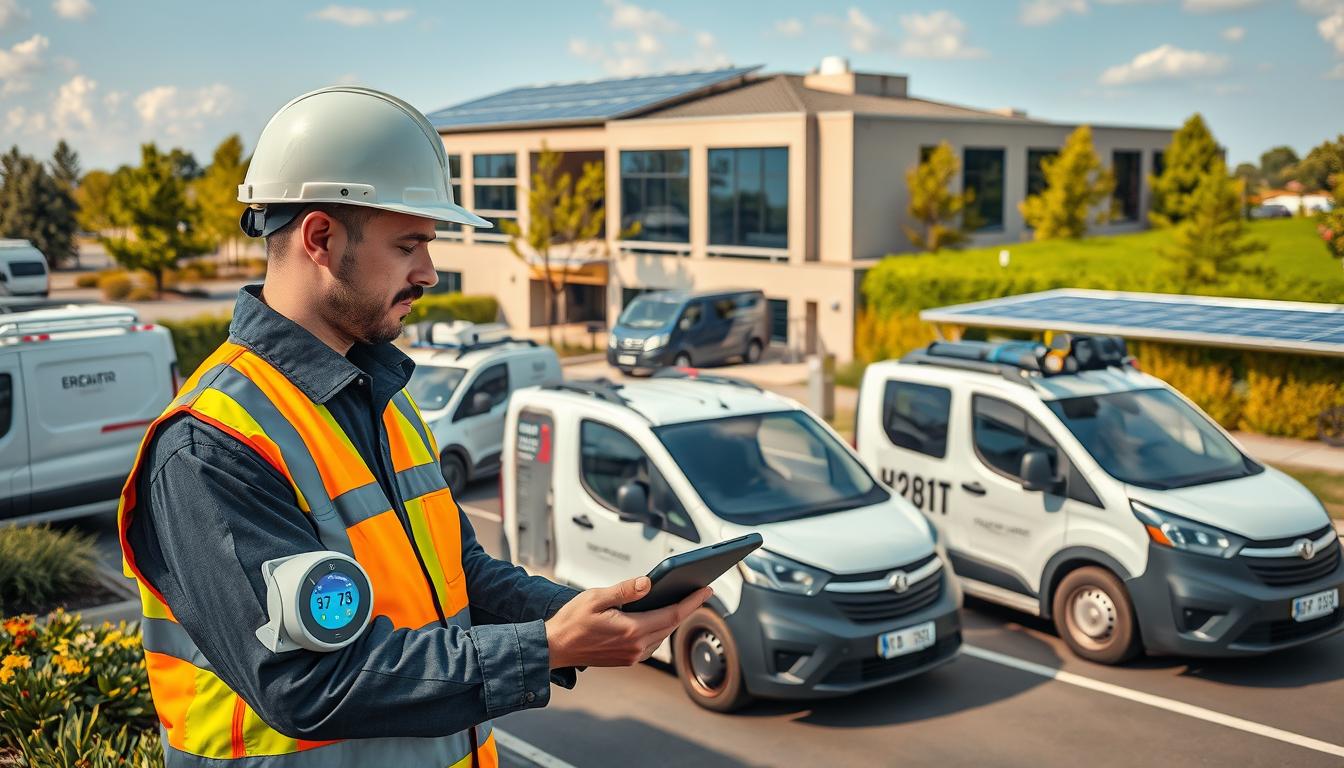
Key Takeaways
- I explain field service in plain terms for HVAC managers.
- Future-proofing matters now due to peaks and staffing limits.
- CRM and AI improve scheduling, communications, and first-time fixes.
- Mobile tools and clean data cut callbacks and speed billing.
- The rest of the article covers top trends, product options, and practical steps.
Why I’m Paying Attention to Field service Trends in HVAC Right Now
I’ve been tracking trends that directly affect how my crews perform during peak weeks. HVAC demand spikes fast, and automation for scheduling and dispatch helps me get techs to jobs on time with fewer trips.
My customers expect clear arrival windows and quick status updates. Modern tools give me the visibility to keep those promises and reduce calls chasing status.
With energy rules and uptime pressure, planning matters more than ever. I use software to balance emergencies with recurring maintenance without burning out my teams.
Rising parts costs squeeze margins, so improving productivity and cutting return visits is my fastest win. Competitive businesses that modernize operations win more work and keep clients coming back.
I’m focused on revenue growth too. Scaling management without losing quality needs clean data, better workflows, and technician enablement that speeds billing and lifts first-time fixes.
The Big Shifts Redefining Field Service Management for HVAC
When demand spikes, automated scheduling is the tool I reach for first. AI-assisted scheduling helps me load-balance work, match skills to tasks, and scale coverage during heat waves or cold snaps. Advanced scheduling and dynamic scaling capabilities make it easier to add slots without chaos.

Mobile app workflows cut friction in the field. My technicians follow step-by-step guides, capture photos and notes, and sync status live. That flow lifts my first-time fix rates and speeds billing.
Connecting CRM, ERP, and inventory gives me real-time parts availability, warranty rules, and pricing. Work orders stay accurate and techs aren’t surprised onsite.
A visual dispatch calendar with GPS and route history tightens travel time and cuts fuel costs. Automated notifications—email, SMS, push—keep customers informed and crews aligned when appointments change.
Finally, standardized checklists, meter reads, and materials usage feed dashboards and reports I actually use. Tracking utilization, SLA adherence, and repeat visits lets me coach teams and reduce callbacks.
How I Evaluate Field Service Management Software for HVAC Teams
When I demo solutions, I look for clear gains in first-time fixes and faster billing. Below are the core platform categories I evaluate based on CRM ties, AI capabilities, and ERP integration.
CRM-Integrated Field Service Platforms
I prioritize CRM-integrated field service platforms with AI that simplify scheduling, communication, and onsite workflows across dispatchers, technicians, and contractors. The product pairs customer data with predictive insights to cut callbacks and build loyalty.
Enterprise Field Service Platforms with Built-In AI
I consider enterprise platforms recognized by industry analysts, especially those with built-in AI assistants that reduce time spent on case creation, scheduling, and technician guidance. Forrester TEI study results over three years give me confidence, and the available demo plus customer stories let me view real improvements at companies documented customer case studies across manufacturing, utilities, and service industries.
ERP-Native Field Service Management Platforms
I include ERP-native field service platforms for scheduling, dispatch, and billing tightly integrated with inventory and finance. Its visual Dispatch Calendar Board, GPS tracking, mobile app with signatures and payments, and flexible billing keep inventory and projects aligned with work orders.
I weigh mobile experience, warranty handling, skill-based routing, and integrations so the chosen management software fits my tech stack and won’t create data silos. Roadmap signals—AI, analytics, and open APIs—matter because I want a partner that keeps innovating, not a dead-end product.
CRM-Integrated Field Service Platforms: Scheduling, Dynamic Scaling, and Customer Loyalty
Salesforce brings CRM, AI, and scheduling into one platform that actually helps me run peak weeks. It is built to support dispatchers, technicians, and contractors without awkward workarounds. That unified base reduces friction across the operation.
I use AI-driven scheduling and dynamic workforce scaling to flex coverage during heat waves and cold snaps. Those tools fill calendars efficiently and cut idle time between jobs. Faster scheduling means I send fewer trucks for the same work.
CRM context sits front and center. I see equipment history, warranties, and customer preferences at a glance. That context helps my technicians personalize visits and avoid repeat calls.

Field automation that speeds work and updates everyone
Automated workflows guide onsite steps, capture required photos, and push real-time updates to the office and customers. Centralized communications—confirmations, ETA updates, and follow-ups—cut no-shows and confusion.
Connected data surfaces trends in repeat work, parts usage, and tech performance. I translate those insights into training, stocking plans, and KPI targets like first-time resolution and jobs per day.
Bottom line: better scheduling and clearer onsite execution raise productivity, boost customer satisfaction, and improve revenue per truck roll. I’m watching AI suggestions closely—those next-best actions are where the biggest productivity gains will come.
Enterprise Field Service Platforms with Built-In AI: AI Copilot and Proven Business Outcomes
I care most about measurable gains—reduced cost, higher revenue, and clearer operations—when I test new software. Some enterprise platforms are consistently recognized by industry analysts for handling complex, large-scale field service operations.
Built-in AI assistants help trim time on case creation, scheduling, and technician guidance that trims time on case creation, scheduling, and technician guidance. Those small time savings multiply across teams and days, lifting productivity without adding headcount.
I also trust Forrester Consulting’s Total Economic Impact study. The TEI composite shows three-year results that help me build a business case around cost savings, revenue impact, and improved KPIs.
What matters to me
I want actionable reports and insights tied to first-time fix, response time, and utilization—not vanity metrics. Integration with Office, Teams, and Azure is a practical plus for smoother adoption.
My rollout plan is a focused pilot, learn from results, then scale. If the platform reduces admin and speeds cash cycles, it pays for itself in both cost and revenue gains.
ERP-Native Field Service Management Platforms: ERP Integration from Quotes to Work Orders
When quoting to completion, I want a single platform that keeps orders, parts, and payroll in sync. ERP-native field service platforms tie inventory, purchasing, and projects together so my sales opportunities become accurate work orders without duplicate entry.
Visual dispatch calendar, route tracking, and GPS-fed resource visibility
The visual Dispatch Calendar Board helps me assign by skill and location. I reduce windshield time and balance schedules across crews.
Real-time GPS route history gives me visibility to update ETAs and reshuffle resources when urgent calls pop up.
Mobile app access to customer history, signatures, and payments
The mobile app for Android and iOS gives my techs instant access to customer history and parts lists. They capture signatures, take payments, and enter receipts on-site to speed the cash cycle.
Contracts, warranties, flexible billing, and multidimensional reporting
Flexible billing supports service by order, PO, or actuals. Warranty management and multidimensional contracts protect margins by enforcing coverage rules for parts and labor.
Drill-down dashboards let me view trends in maintenance, parts usage, and technician utilization. Enterprise-wide integration also lets me convert CRM opportunities to orders and create purchase orders from the field.
How I’d Choose and Implement Service Management Software for HVAC
Practical planning matters more than vendor hype. I run hands-on tests and pilots that prove scheduling, mobile UX, and parts visibility work under real pressure.
Selection criteria: scheduling depth, mobile UX, first-time fix rates, and reports
I test scheduling for skills, certifications, travel optimization, and dynamic scaling. I validate mobile UX for offline behavior, photo capture, signatures, and guided steps.
I make first-time fix the centerpiece by checking parts visibility, asset history, and playbooks that lift first-time fix rates. I confirm dashboards match how my teams operate—utilization, SLA compliance, response time, and repeat calls.
Implementation roadmap: data migration, technician onboarding, and KPIs
My rollout starts with clean data migration: customers, assets, warranties, contracts, and price books must be correct day one. I script short, role-based onboarding with scenario-based training so adoption sticks.
I define KPIs—first-time fix, jobs per day, travel time, invoice cycle time—before go-live and pilot a single region. Feedback drives iteration, then I scale to all teams.
Proving ROI: productivity gains, cost control, and customer satisfaction
I build an ROI model that ties productivity improvements and cost reductions to customer satisfaction and revenue from renewals and upsells. Vendor demos, analyst reports, and ROI benchmarks results.
Conclusion
I close this guide with a simple plan: shortlist platforms, run a short pilot, and scale what proves measurable. That approach keeps risk low and outcomes clear.
Some platforms excel at CRM-driven workflows, others stand out with embedded AI, and some offer deep ERP integration with dispatch and billing. The right choice depends on how tightly scheduling, inventory, and finance must connect.with visual dispatch and mobile payments. Each route helps me tighten schedules, improve maintenance planning, and speed billing.
My goal is practical: more first-time fixes, fewer repeat visits, and steady revenue gains. I’ll keep contracts and orders digital-first, review dashboards weekly, and involve field leaders so the team owns the change.
Now is the time to act—move from intent to implementation before the next surge hits, and watch customer satisfaction grow as operations stabilize.
See how FieldAx can transform your Field Operations.
Try it today! Book Demo
You are one click away from your customized FieldAx Demo!
FAQ
What key trends should HVAC managers watch to future-proof their operations?
I focus on AI-assisted scheduling to handle peak demand, mobile workflows that improve first-time fix rates, and connected data across CRM, ERP, and inventory systems for real-time visibility. I also track analytics and KPI reporting to move from task-based work orders to outcome-driven operations.
How does AI-assisted scheduling help during busy seasons?
I use AI to dynamically scale workforce allocation and optimize dispatching. That reduces travel time, balances workloads, and increases technician productivity so I can meet higher demand without hiring immediately.
What should I expect from mobile app workflows for technicians?
A good mobile app gives technicians job details, parts availability, customer history, and sign-off capabilities. I find this streamlines onsite steps, improves first-time fix success, and speeds billing and invoicing.
Why is integration with CRM and ERP important for HVAC operations?
When customer records, inventory, and financials sync, I get accurate scheduling, fewer parts shortages, and better visibility into job costs. That alignment helps reduce overhead and improves customer satisfaction.
How does Salesforce Field Service support technician and contractor teams?
Salesforce offers robust dispatch tools, AI-assisted routing, and customer communication features. I lean on it when I need seamless CRM integration and tools that boost loyalty through consistent, reliable visits.
When is Acumatica the right choice for HVAC companies?
I choose Acumatica when ERP-native workflows matter — for example, when quotes, contracts, and billing need tight integration with scheduling and inventory. Its visual dispatch calendar and GPS tracking also help with route visibility.
What selection criteria should I use when evaluating software?
I evaluate scheduling depth, mobile UX, first-time fix tracking, reporting and analytics, parts and inventory management, and integration with CRM or ERP. Those factors directly affect technician productivity and cost control.
How do I implement a new management system without disrupting operations?
I follow a roadmap: plan data migration, run pilot projects, onboard technicians with hands-on training, and set clear KPIs. Incremental rollouts and feedback loops help me minimize downtime and accelerate adoption.
How can I prove ROI after deploying a tool?
I track productivity gains, reduced travel and parts costs, higher first-time fix rates, faster invoicing, and improved customer satisfaction scores. Comparing these KPIs before and after deployment shows the business impact.