
Surprising stat: 17% of service organizations don’t even measure their first-time fix rate, while the industry average sits near 75%.
I want to walk you through four practical levers that helped me push a field service team toward a 90% target. These are rooted in real gains: integrated workforce management software, mobile tools, clearer inventory, and focused training.
Why this matters: fixing a job on the first visit drives higher customer satisfaction, fewer return trips, and lower operational costs. I’ll show how to balance parts availability, diagnostics skill, and process discipline so my techs visit less often and stay on schedule more.
I also make one point clear: technology alone won’t do it. The real uplift comes when software, training, and management work together as solutions, not silos. Read on and I’ll give you metrics and workflows you can use today to prove ROI.

Key Takeaways
- I outline four levers that combine people, parts, process, and platforms.
- Higher first-time success directly improves customer satisfaction and retention.
- Workforce software and mobile integrations deliver measurable efficiency gains.
- Parts visibility and targeted training cut repeat visits and on-site time.
- 90% is an ambitious but reachable benchmark when you coordinate solutions across the business.
Why boosting first-time fixes matters now for HVAC customer satisfaction and efficiency
I believe getting the job done on the first visit matters more today than ever. When I resolve an issue on the first time the customer sees immediate relief, and customer satisfaction climbs.
Aberdeen Group found 17% of organizations don’t track this metric, even though the industry average sits near 75%. Customers tell us 57% of calls still need improvement, and every repeat visit adds real costs—fuel, drive time, schedule reshuffles, and safety risk.
Even a top-performing 88% leaves 12% of calls needing follow-ups. Raising that rate by a few points frees capacity I can redeploy to urgent work. Higher first-visit success also lifts technician morale and reduces frustration tied to lingering issues.
Seasonal peaks and complex equipment magnify the pain of low results, so I start by measuring and reporting the kpi consistently. With clear data, my organization can target the biggest opportunities and deliver on-time appointments customers notice and reward with loyalty.
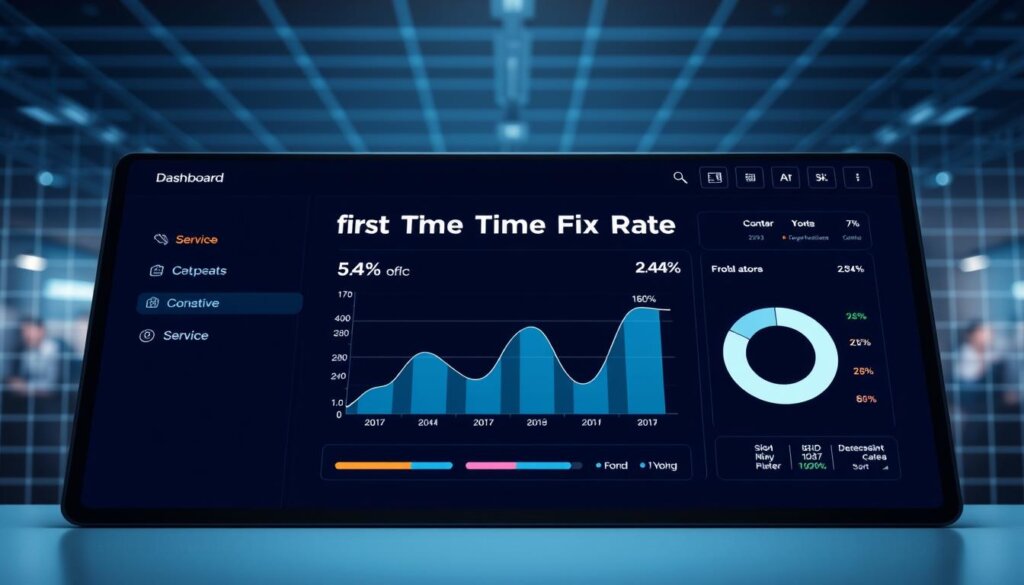
What is First-Time Fix Rate and how it’s calculated as a service KPI
This section explains the practical metric I track to measure successful repairs on a single visit.
FTFR in plain terms
I define first-time fix rate as the share of jobs completed without needing another appointment. In short, it means resolving the primary problem on the first visit and leaving the customer satisfied.
Simple formula and benchmarks
The math is straightforward: FTFR = (number of jobs fixed on the first visit / total number of jobs completed) × 100. That gives a clear percentage to track weekly.
Typical industry rates fall between 70–80%, and HVAC repair shops often target 75–85% because equipment complexity and seasonal surges raise the challenge.
Why clear data and definitions matter
Accurate results depend on consistent work order information. Technicians must log parts used, symptoms, and outcomes so the data stays trustworthy.
I treat this figure as a core kpi and pair it with related rates like time on site and repeat-call flags to spot trends and improve performance.
Build a connected service stack: field service software, mobile integrations, and customer portals
When software, mobile tools, and portals work together, I eliminate guesswork before every site visit. A connected stack makes jobs predictable and keeps parts available when my techs arrive.
Workforce management and CMMS: real-time jobs, parts, and technician scheduling
I standardize on field service software and CMMS so I can push accurate jobs and assign the right technician. Real-time inventory updates let me reserve parts before the visit and avoid on-site scrambling.
Mobile integrations that streamline manager-tech-customer communication
Mobile integrations enable instant communication across the team. Photos, diagnostics, and scheduling changes flow fast so managers, techs, and customers stay aligned.
Customer portals for scheduling, warranty checks, and transparent two-way updates
I give customers portal access to self-schedule, verify warranty coverage, and exchange updates. AIG saw a 40% increase in first-time success and a 20% drop in time on site after linking dispatch with customer portals.
I use automations to pre-check parts availability, attach manuals to work orders, and surface data that points to process gaps. Then I measure before-and-after results to prove the value of the stack to leadership.
Hire for capability, train for complexity: upskilling HVAC technicians for first-time success
I prioritize hiring people who solve complex problems on the job and learn quickly. In a tight labor market, I look for technicians with solid judgment and steady reliability over polished resumes.
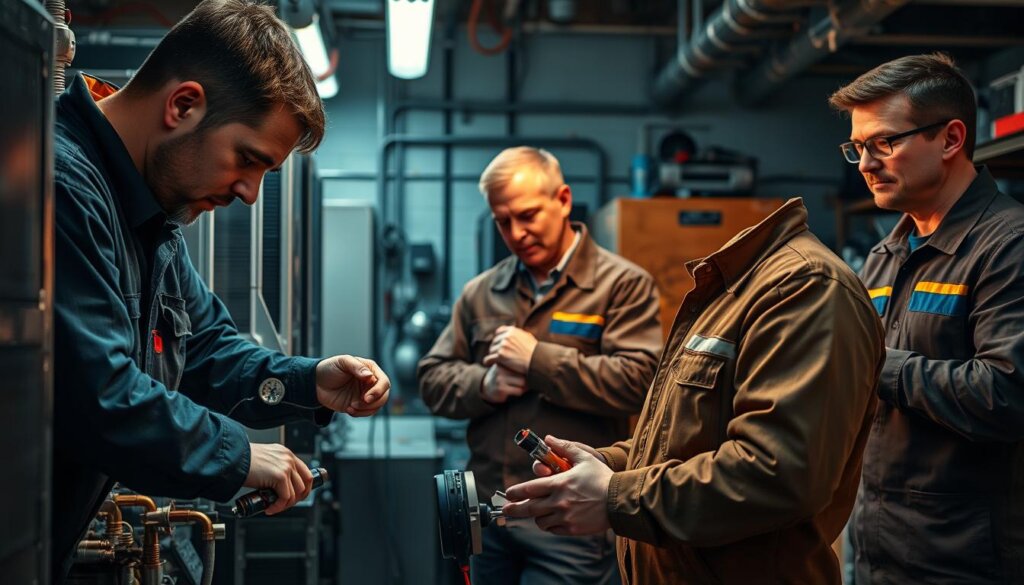
Once hired, I pair newer technicians with seasoned pros so mentorship builds strong diagnostic habits. Short mentorship cycles let the trainee shadow, then lead, then debrief in a safe loop.
Practical, on-the-job learning
I deploy micro-courses and bite-sized training directly to the mobile app. These modules cover DTC interpretation, wiring diagrams, and common repair scenarios so a technician can study between calls.
I make technical information easy to access: manuals, bulletin notes, prior work orders, and checklists are linked to each job. Quick access reduces guesswork and speeds repair decisions.
Coaching, progression, and culture
I coach technicians to confirm symptoms, take clear photos, and log details that prevent repeated problems. Regular simulations and post-job debriefs lock in lessons and cut repeat visits.
Finally, I map a clear progression path tied to certifications and celebrate service wins. Small recognitions like a “save of the week” spread best practices and raise the whole team’s success.
Make parts and information available on the first visit: inventory visibility and van stock optimization
To cut return visits, I make sure technicians leave with the right components and information every time. Real-time inventory visibility and the ability to reserve parts per work order are the backbone of that approach.
Real-time parts availability and reservation to prevent return trips
I require a parts check and reservation step before dispatch so the right components are staged or loaded on the van for the job. When a specialty item is needed, reserving it in advance keeps the customer from waiting.
Critical spares strategy for common HVAC repairs and seasonal peaks
I keep a critical spares list—capacitors, contactors, motors, igniters—and flex it for seasonal demand. Aligning warehouse reorder points with service data prevents stockouts when the industry sees peak volume.
Optimizing van stock based on job history, geography, and data trends
I tune van stock using job history and local patterns so technicians carry the parts they actually use. Field reorders from the mobile app trigger immediate replenishment and track usage against the job.
I attach installation guides and torque specs to the work order so the tech has the info to finish correctly. Periodic audits trim unused items and improve efficiency, while clear communication keeps the customer informed when specialty lead times exist.
Use data, AI, and predictive maintenance to eliminate second visits before they happen
I lean on sensor signals and AI to make sure my technician arrives ready for the job.
Predictive signals that let me arrive with the right parts and plan
I use predictive alerts—from sensors, controller data, and error codes—to anticipate issues. That lets me plan the repair and bring the right parts.
I analyze repeat issues by model and environment to pre-stock common components. Over time, those trends lift my first-time fix outcomes.
Instant access to equipment history, prior work orders, and diagnostic insights
I surface equipment history and prior work orders on my mobile so the tech avoids repeated diagnostics. Fast access to past notes speeds decisions and shortens the time fix cycle.
I standardize diagnostic checklists for recurring issues and tag every repair with structured data. When AI suggestions are available, I use them to prioritize likely causes and refine playbooks.
I also escalate complex cases virtually before dispatch when possible. A solid feedback loop updates thresholds and keeps improving future predictions and solutions.
Measure, report, and sustain gains: turn FTFR into a continuous improvement habit
Sustaining improvements means embedding the right reports and rhythms into daily work. I set a clear weekly cadence so everyone knows which metric matters and how we count success.
Weekly cadence and shared definitions
I hold a short weekly check-in with dispatch, parts, and field leads. We review the fix rate, repeat-call flags, and time on site.
Clear definitions matter: a single, shared definition of “first fix” removes ambiguity and improves consistency across teams.
Dashboards that drive fast action
My dashboards pair the fix rate with technician utilization and calls per tech. Visual trends surface weak spots by model or region so I can act fast.
When I see a low rate for a model, I target coaching, tweak van stock, or adjust processes to close the gap.
Communication, recognition, and continuous improvement
I keep communication short and practical: “what worked” huddles and exception reviews. I share customer satisfaction alongside the metric so the team sees real impact.
I also recognize technicians who raise rates and document successful changes so we repeat wins through peak seasons.
Conclusion
My closing point: combine people, parts, processes, and platform to make the first visit count every time.
I summarize the four-part plan: connect my software stack, upskill technicians, stage parts and information, and use data to prevent repeat visits. This blend drives measurable gains in customer satisfaction and cuts costs.
Success is a team sport across dispatch, management, field work, and inventory control. I commit to measuring the metric weekly and pairing it with related KPIs so progress is clear.
Start with clear definitions, instrument the data, tune inventory availability, and celebrate each first visit repair. With steady management and consistent process discipline, I can push my first-time fix rate toward 90%.
See how FieldAx can transform your Field Operations.
Try it today! Book Demo
You are one click away from your customized FieldAx Demo!
FAQ
What exactly do I mean by improving the first-time fix metric for HVAC?
I mean boosting the percentage of service jobs resolved on the first technician visit without follow-ups. That involves aligning skills, parts, data, and processes so I leave a site with the unit working and the customer satisfied.
How is that metric calculated and what target should I aim for?
I divide successful first-visit repairs by total service visits over a set period, then multiply by 100 for a percentage. Many HVAC teams aim for roughly 75–85%, while top performers push toward 90%.
Why does improving this metric matter for customer satisfaction and costs?
When I fix units on the first visit customers get fast relief and trust my service. I also cut repeat-trip costs, reduce technician overtime, and raise productivity—so satisfaction and margins improve together.
Which software tools deliver the biggest lift to on-site success?
Field service management, CMMS, and mobile integrations help me see jobs, parts, and history in real time. Combined with customer portals for scheduling and warranty checks, these tools reduce guesswork and speed resolution.
How should I equip technicians with the right information in the field?
I provide mobile access to equipment history, wiring diagrams, diagnostic trouble codes, and prior work orders. Instant access to that data lets me diagnose faster and arrive with the right plan.
What hiring and training practices raise my odds of first-visit success?
I hire for problem-solving and reliability, then use on-the-job mentorship, short micro-courses, and regular hands-on refreshers. Providing access to manuals and DTC guidance closes skill gaps quickly.
How do I ensure the right parts are available during the first visit?
I use real-time inventory visibility, parts reservation, and data-driven van stock optimization. Reserving parts for scheduled jobs and stocking critical spares for common HVAC failures prevents return trips.
What is a critical spares strategy and how do I build one?
I analyze past jobs to identify commonly used components by equipment type, season, and region. Then I prioritize those spares for vans and warehouses to minimize out-of-stock situations.
How can predictive analytics and AI help me reduce second visits?
AI can surface predictive signals—like failing compressors or control-board degradation—so I show up with the right parts and plan. It also flags risky jobs that need two technicians or special tools ahead of time.
What reporting cadence and KPIs keep improvements sustained?
I run weekly reports with a clear definition of a “first fix,” track related KPIs such as technician utilization and average time on site, and review dashboards to spot trends and coach technicians.
How do I measure technician performance without unfairly penalizing field realities?
I combine FTFR data with job complexity, parts availability, and access issues. That context lets me reward true performance, identify training needs, and avoid blaming techs for inventory or scheduling shortfalls.
What operational changes give the fastest wins for improving my first-visit outcomes?
I prioritize van stock updates, implement quick-access mobile diagnostics, set parts reservation rules, and run focused coaching on top failure modes. Those actions yield measurable gains within weeks.
How does better communication with customers reduce repeat visits?
Clear two-way updates, pre-visit checks, and simple questions about symptoms let me gather crucial info before arrival. That lowers surprises on site and increases the chance I fix it then and there.
Can remote diagnostics or video calls actually improve my success on site?
Yes. Remote diagnostics and short video triage let me verify symptoms and recommend parts ahead of the visit. In many cases I can prepare correctly or even walk a customer through a simple fix remotely.
What role does parts inventory management software play in raising my percentage?
Inventory software gives me real-time visibility, automatic reordering, and usage analytics. That reduces stockouts, speeds replenishment, and ensures technicians have the parts they need for common repairs.
How do I balance van stock costs with the goal of fixing more on the first visit?
I use job history and geographic trends to stock high-probability items, keep critical but compact spares on vans, and rely on fast local distribution for low-frequency parts to control working capital.
What training topics move the needle most for field technicians?
I focus on diagnostic workflows, common failure modes, control-board troubleshooting, refrigeration fundamentals, and soft skills like customer interviews. Short, repeated micro-lessons stick better than long lectures.
How do I involve management in sustaining improvements?
I set shared targets, publish weekly dashboards, and run short review sessions that connect the field to leadership. When managers see the data, they fund tools and training that keep progress moving.
Are there quick KPIs I can track while I build a long-term program?
I track same-day resolutions, parts reservation compliance, technician first-visit success by job type, and customer satisfaction scores. Those give fast feedback while broader programs take hold.