
Surprising fact: nearly 70% of lost revenue from churn traces back to unclear terms and slow approvals.
I’ve built a simple, repeatable process so every agreement protects cash flow and sets clear expectations for both parties. Good service contract management aligns teams, cuts approvals, and keeps technicians on schedule.
For HVAC maintenance, predictable visits, defined scope, and measurable performance turn contracts into steady income. I use templates, automation, and a single software hub to reduce errors and speed sign-up.
Digital signatures compress time-to-execute from days to minutes. That means faster scheduling, happier customers, and cleaner handoffs between sales, ops, and finance.
In this guide I’ll walk through my process, the software stack I trust, and how I track performance so contracts become reliable assets, not admin headaches.

Key Takeaways
- Clear terms and a disciplined process protect revenue and reduce churn.
- Automated templates and digital signatures speed approvals from days to minutes.
- A single software hub keeps contract data accessible to sales, ops, and finance.
- Defined scope and schedules improve customer satisfaction and retention.
- I combine tools, templates, and shared ownership to keep work flowing.
Why I’m Automating HVAC Service Contracts Now to Protect Revenue
Right now I’m moving HVAC paperwork into automation to stop small errors from becoming big losses. Managing large volumes and mixed scopes with staggered renewal dates creates real risk when anything slips.
Manual processes make it easy to miss seasonal tune-ups or scheduled visits. Missed work can trigger credits, penalties, and frustrated customers.
I work with sales, operations, finance, and legal, so automation keeps our teams aligned on dates, deliverables, and expectations. Alerts and reminders push critical deadlines to the right people before they become emergencies.
Standardized language reduces back-and-forth while protecting the company’s interests and client commitments. Visibility into performance and cycle time gives me the data I need to prioritize high-value agreements and justify tool investments.
Ultimately, automating repeatable steps moves parties from intent to signed paper on time, every time, preserving recurring revenue and cutting scramble-driven costs.
My How-To Roadmap for the Entire Contract Lifecycle
I break the lifecycle into clear phases so every party knows the next step. That makes handoffs predictable and reduces mistakes.
Contract creation: templates, clause libraries, and standardized language
I start with templates and clause libraries so pre-approved language covers scope, payment terms, and compliance without reinventing the wheel. This reduces drafting errors and speeds creation.
Negotiation and approvals: parallel reviews and version control for speed
During negotiation I run parallel reviews with version control so operations, sales, and legal can weigh in simultaneously. That cuts cycle time and keeps everyone aligned on the active draft.
Execution: digital and electronic signatures to shorten cycle time
For execution I rely on digital signatures with PKI security. These reduce average signing time from days to roughly 30–40 minutes so technicians get scheduled faster.
Service delivery: translating terms into SLAs, schedules, and field workflows
I translate final terms into clear SLAs, visit frequency, and field workflows. Dispatch follows the workflow without ambiguity, which improves first-time fixes and on-time delivery.
Monitor performance: KPIs, real-time reporting, and feedback loops
I define KPIs like cycle time, first-time fix rate, and SLA adherence, then monitor performance through real-time reporting. Automated alerts flag exceptions so I can act early and refine templates.
Renewal and expansion: alerts, data-driven upsells, and on-time renewals
Reminders trigger before the end of term so I can review performance, propose upsells like IAQ add-ons, and secure on-time renewal. All contracts and related data live in one repository so parties always see the current version and upcoming milestones.
Service Contract Management Best Practices I Rely On
My approach centers on simple rules: define outcomes, involve the right people early, and keep record trails that make issues solvable. These habits reduce surprises and protect recurring revenue.
Define clear objectives and measurable outcomes for each contract
I set specific goals like uptime targets and preventive windows so success is measurable. Clear metrics make it easy to decide when to escalate or offer credits.
Engage stakeholders early so legal, operations, and sales work together
Bringing stakeholders in at draft stage avoids late changes. Sales, ops, finance, and legal align on scope and pricing before signatures, which speeds execution.
Maintain thorough documentation to resolve issues and ensure transparency
I capture approvals, amendments, and versions in a single repository. That audit trail shortens disputes and keeps all parties informed.
Negotiate with flexibility while protecting standards and compliance
I trade commercial flexibility on non-critical items while locking in standards and compliance clauses. This balance preserves relationships without exposing risk.
I also use consistent terms, automated alerts for milestones, and periodic reviews to update templates. Finally, I train teams regularly so the playbook is followed and improved as business needs change.
The Software Stack: Contract Management Software, Automation, and Integrations
Choosing the right systems shrinks cycle time and keeps teams focused on delivery, not paperwork. I use a mix of CLM platforms, legal AI, and integrations so the whole process runs through one hub.
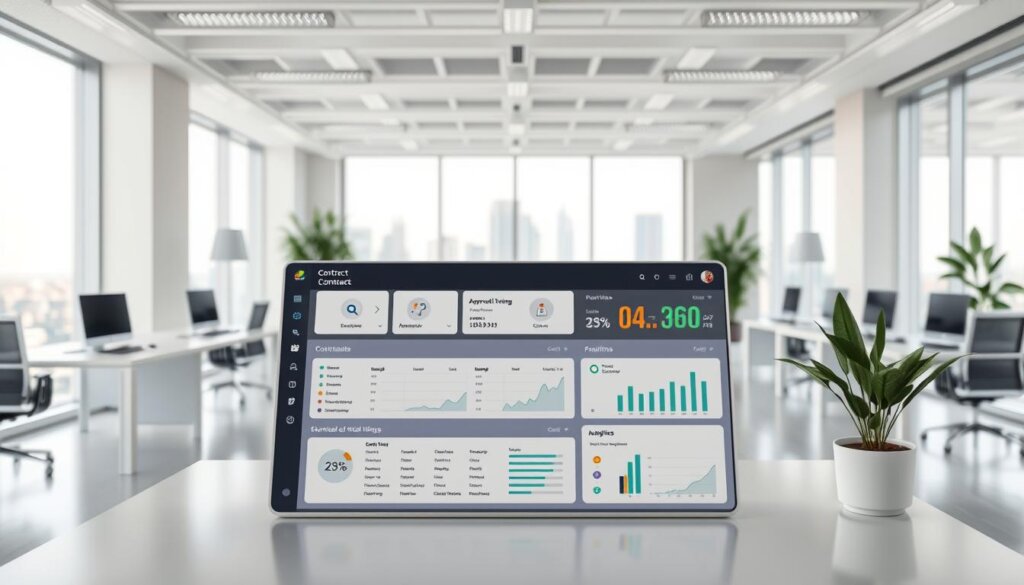
CLM as the hub: a single platform centralizes drafts, templates, terms, and archives so the entire contract lifecycle is visible. This reduces errors and speeds negotiation, renewal, and archiving.
AI assistance: I lean on AI to draft faster, suggest clauses, and flag compliance issues. Machine learning also helps ingest legacy documents so we avoid manual entry and bad data.
Centralized repository & collaboration: one source of truth holds obligations, renewal dates, and service milestones. Teams edit in real time, comment, and approve without version confusion.
Automations and integrations: automated reminders surface expirations early. I sync CLM to CRM, field tools, and project platforms to keep workflows aligned from quote to delivery.
Execution: digital signatures cut execution from days to minutes and use PKI security for integrity. I evaluate modern contract lifecycle management (CLM) platforms with AI-assisted extraction and customizable workflows that suit HVAC operations.
Applying This to HVAC: Templates, Terms, and Compliance That Drive Profit
Clear templates turn recurring work into steady income and predictable field delivery. I build documents so office staff, dispatch, and techs all know what success looks like.
HVAC-specific templates: maintenance agreements and seasonal schedules
I create HVAC templates for maintenance agreements that list seasonal tune-ups, filter changes, coil cleaning, and emergency response windows. Each template maps tasks to technician checklists so visits are consistent.
Payment terms and scope: clear SLAs, parts/labor, and performance expectations
I define payment terms, scope, and SLAs up front. That includes parts-and-labor inclusions, exclusions, response times, and resolution expectations so customers know what to expect.
Compliance and data: regulated industries, privacy, and audit readiness
For hospitals and finance firms I add privacy provisions, access controls, and audit-ready logs. Centralized data on equipment, sites, and schedules supports renewals and capacity planning.
I set preventive maintenance frequencies using manufacturer guidance and local standards. Client-specific rules — after-hours windows or badge checks — get added to site records so visits go smoothly.
I monitor performance against SLAs and use results at renewal to justify upsells like efficiency retrofits or IAQ packages. Good language and centralized creation protect the company and keep customers satisfied.
How I Measure Success and Continuously Improve
My focus is on tracking key signals so we catch problems before they cost retention or revenue. Real-time analytics and reporting from our software turn noise into clear priorities. That helps me adjust staff, schedules, and vendor support before clients notice an issue.

Core KPIs: cycle time, renewal rate, service quality, and contract performance
I track cycle time from request to signature, renewal rate by segment, SLA adherence, and contract performance to see where we win or stall. Dashboards show trends so I can prioritize agreements at risk and propose timely expansions.
Training and policy updates: keeping teams aligned with best practices
I run quarterly training so teams stay current on templates, language updates, and process changes. Policy reviews happen biannually and I push approved updates into templates and playbooks immediately.
Customer and internal feedback: closing the loop to refine language and workflows
I gather feedback from clients and internal stakeholders after major milestones. Those notes drive small edits to terms, clearer workflows, and better field checklists.
Success for me is measurable: higher renewal rates, improved service quality scores, and faster time to signature. I set quarterly targets and iterate on the process to keep improving speed, quality, and retention.
Conclusion
A clear contract lifecycle and the right tools make renewals routine instead of risky events.
I recap: automating service contract management protects revenue by cutting cycle time, improving compliance, and aligning teams on obligations. Modern CLM platforms centralize contracts, sync with CRM, and support PKI digital signatures so approvals happen in minutes.
Use contract management software with CLM to create one source of truth, reliable workflows, and faster approvals. Follow best practices—set objectives, involve stakeholders early, and keep tight documentation across the entire contract.
Next step: standardize templates, connect your stack, measure what matters, and start seeing measurable gains. Thanks for reading—apply this roadmap to your HVAC service contracts and watch renewal and success improve.
See how FieldAx can transform your Field Operations.
Try it today! Book Demo
You are one click away from your customized FieldAx Demo!
FAQ
Why should I automate HVAC service agreements now to protect revenue?
I automate now because automation reduces missed renewals, speeds approvals, and cuts administrative errors that leak revenue. Automation also gives me timely alerts and clear visibility into obligations so teams meet SLAs and avoid penalty costs.
How does a roadmap for the entire contract lifecycle help my field teams?
I follow a lifecycle roadmap so templates, approvals, signatures, delivery schedules, and monitoring all flow together. That consistency helps technicians know expectations, reduces disputes, and shortens the time from sale to fulfilled work.
What should templates and clause libraries include for HVAC agreements?
I include standardized scope descriptions, parts and labor terms, warranty language, pricing formulas, and escalation paths. That makes drafting faster, keeps language consistent, and protects margins during negotiations.
How can I speed negotiations without sacrificing compliance?
I set parallel review tracks, use role-based approvals, and apply clause-level guardrails. This lets legal and operations review simultaneously while enforcing mandatory terms so deals close faster and stay compliant.
Are digital signatures secure enough for my agreements?
I use digital signature providers with PKI security and audit trails. They meet legal standards, reduce execution time from days to minutes, and create an immutable record for audits and disputes.
How do I translate contract terms into field workflows and SLAs?
I convert key obligations into work orders, scheduled maintenance tasks, and acceptance criteria in the field system. That ensures technicians follow the contract and enables me to track compliance through KPIs.
What KPIs should I monitor to measure agreement performance?
I track cycle time to execute, renewal rate, on-time completions, mean time to repair, and customer satisfaction. Those metrics show whether terms drive profitability and where to improve processes.
How do alerts and automated reminders prevent revenue loss?
I configure reminders for upcoming renewals, expirations, and milestone payments. Automated notices reduce lapses, trigger upsell opportunities, and keep billing aligned with delivered work.
What integrations matter most for HVAC agreement automation?
I integrate with CRM, field service management, ERP, and payment systems. Those connections eliminate double entry, sync customer and job data, and keep financials accurate.
How can AI help with drafting and compliance checks?
I use AI to suggest clauses, flag risky language, and auto-populate customer data. It speeds drafting and ensures my agreements meet internal standards and external regulations.
What payment terms and scope details protect my margins?
I define clear pricing for parts and labor, set approval limits for change orders, include pass-through costs, and specify billing cadence. Clear scope definitions reduce disputes and preserve margin on extra work.
How should I handle renewals and expansion opportunities?
I combine automated renewal alerts with account data to time outreach. Data-driven upsell prompts and early renewal incentives help me grow revenue while keeping customers on continuous coverage.
What documentation practices reduce risk in audits or disputes?
I keep a centralized repository with version history, signed agreements, amendment logs, and performance records. Complete documentation speeds resolution and proves compliance in audits.
How do I train teams to follow new processes and templates?
I run short, focused training sessions, provide template guides, and maintain a feedback loop. Ongoing coaching and updated policies keep teams aligned and reduce errors.
What compliance and privacy concerns apply to HVAC agreements?
I protect customer data, follow industry-specific regulations, and keep auditable records of consent and disclosures. That reduces legal exposure and builds customer trust.
How often should I review and update my agreement language?
I review language annually or after any major regulatory change or recurring dispute. Regular updates keep templates current, reduce negotiation friction, and reflect operational realities.