
Sales teams with dispersed territories face a common challenge: how to cover more customers with less wasted time. In many organizations, field reps spend hours every day planning their own route, often without a clear picture of geography or priorities. Inefficiencies creep in as routes overlap, travel time balloons, and visits are missed or delayed. At an executive level, these day-to-day frictions translate into higher costs, inconsistent customer coverage, and lost revenue opportunities. Route optimization offers a systematic solution: by intelligently planning each day’s itinerary, organizations can transform a haphazard travel schedule into a streamlined, predictable operation. This article explains the key challenges of uncoordinated field scheduling, introduces the concept of route optimization, and shows how core features like visual mapping and managed workflows drive productivity, speed, accountability, and transparency in sales execution.

Key Challenges in Field Sales Route Planning
Even well-intentioned field teams can struggle with inefficient planning. Without a dedicated system, sales reps typically plan visits on their own, juggling customer lists and maps mentally. This often leads to several operational bottlenecks:
- Scattered customer locations. Customers, dealers, or retail partners are often spread over wide regions. Without geographic awareness, reps may zigzag across a territory, driving extra miles between appointments.
- Lack of geographic visibility. Planning by address lists or spreadsheets hides critical location context. Reps may not realize that nearby customers could be visited together, or that natural clusters exist by region.
- Manual planning errors. Manually sequencing appointments is time-consuming and error-prone. Reps may forget a stop, double-book time slots, or misjudge travel time. Last-minute changes (canceled meetings, traffic, urgent calls) add confusion.
- Inconsistent prioritization. Without guidance, reps might spend too long with one customer or miss high-priority visits. Managers have limited insight into how well each day’s plan aligns with strategic goals.
- Limited manager oversight. Field leaders often lack real-time visibility into where reps are and what they’re doing. This makes it hard to reassign visits on the fly, identify regional performance gaps, or provide timely support when issues arise.
These challenges mean that many sales organizations see more driving and less selling than necessary. Time that could be spent meeting customers is often consumed by ad-hoc detours, navigation errors, and avoidable backtracking. At scale, this inefficiency can weaken competitive positioning: slower response to customer needs, higher travel costs, and gaps in market coverage.
Understanding Route Optimization
Route optimization is a technology-driven approach to planning field visits. In essence, it uses algorithms to arrange stops in the best possible order, balancing travel distance, appointment priorities, and timing constraints. For CXOs and business leaders, the core idea is simple: let software do the heavy lifting of scheduling so that sales teams can execute with maximum efficiency.
A route optimization solution typically works like an intelligent assistant. When a sales rep’s list of customers or tasks is uploaded, the system plots each location on a map and calculates an optimal path. This path is designed to minimize total driving time or distance while respecting any business rules (for example, meeting certain customers on particular days or considering service hours). The result is a sequenced itinerary — often visualized on a digital map — that the field rep can follow step by step.
Key benefits of this concept include:
- Time savings: By eliminating backtracking and redundant travel, reps spend more time engaging customers and less time on the road.
- Consistency: Every rep in every region follows a systematic approach, leading to predictable coverage and easier measurement of performance.
- Scalability: As the territory or team grows, route optimization scales smoothly. What takes minutes to compute for a single rep would be error-prone if done manually across dozens of reps.
Ultimately, route optimization turns a complex logistical problem into an automated process. It integrates mapping data, customer locations, and business priorities to generate an actionable plan. The big idea for executives is that this methodology creates operational leverage: each sales hour is used more effectively, driving top-line growth while containing travel costs.
Core Features of a Route Planner
Modern route-planning tools offer several features that directly address the challenges above. When implemented correctly, these features collectively ensure that field teams spend more time selling and less time struggling with schedules.
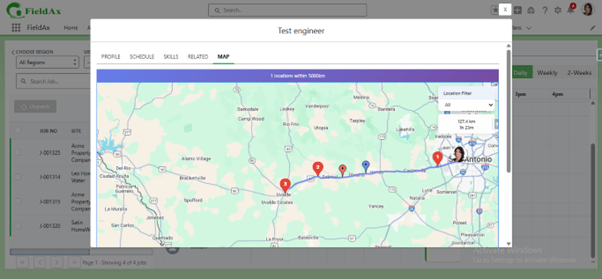
- Visual Mapping: One of the most powerful features is an interactive map of the entire route plan. Instead of lists of addresses, sales reps and managers see all the day’s stops plotted geographically. This visual context lets reps quickly assess their coverage area, identify nearby opportunities, and avoid surprises. A map can also highlight new or high-priority prospects in the region. For example, a cluster of pins may reveal that five customers in one area could be visited in a loop, rather than separate trips. By seeing the “big picture” on a map, reps can mentally prepare for the day, and managers can verify that the plan makes sense.
- Guided Visit Flow: Once the route is optimized, the tool provides a guided “visit flow” or itinerary. This is essentially a step-by-step agenda for the day, showing each stop in sequence. The flow can include the planned visit order, customer details, and any notes or objectives for each meeting. As the rep completes one stop and moves to the next, the system updates the itinerary dynamically. This guided approach reduces cognitive load on reps: they no longer need to remember the plan or consult paper notes. Instead, the app leads them from stop to stop, often with turn-by-turn navigation. If a last-minute change occurs (for example, a cancellation), the tool can re-route on the fly to keep the schedule optimized.
- Geographic Sequencing: At the heart of the route planner is geographic sequencing logic. The software clusters appointments so that travel is as efficient as possible. For instance, it might group all visits in a downtown district on one pass, then cover suburban locations in the afternoon. This sequencing avoids long lonely drives that could have been split differently. Geographic sequencing also respects natural boundaries like zip codes or administrative regions, ensuring that no territory is repeatedly crossed over. The planner may allow manual adjustments too, so reps can fine-tune the sequence if local knowledge suggests a small change. But by default, the system’s ordering cuts out wasted mileage and ensures that every district gets full coverage before moving on.
- Manager Oversight and Real-Time Visibility: Route optimization isn’t just a field-level tool; it’s a management solution too. Supervisors can use the same system to review planned routes for all reps in their area. This manager view shows each team member’s itinerary on a map or dashboard, making it easy to spot imbalances or gaps in coverage. Managers can reassign calls if one rep is overloaded or check status during the day. In many tools, GPS tracking can feed back into the system, so managers know when a rep is late or off track. This real-time oversight builds accountability: reps know that leadership sees their progress, which motivates adherence to the plan. It also helps leaders coach their teams more effectively, since performance metrics (like on-time visits or total travel time) become transparent.
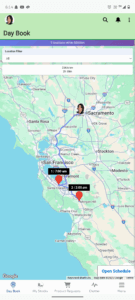
These core features—map-based planning, guided itinerary, smart sequencing, and oversight—are what turn simple route lists into a strategic process. Without each feature, inefficiencies creep back in. Together, they create a robust system that supports field execution from the day’s start through post-visit analysis.
Business Impact: Productivity, Speed, Accountability, Visibility
Implementing route optimization has clear benefits that align directly with strategic and operational goals. From a CXO perspective, the value comes in several dimensions:
- Higher Field Productivity: By reducing time on the road, reps can make more customer visits each day. Those reclaimed hours translate into additional client meetings or follow-ups. In practice, teams see significant lift in coverage without adding headcount. More visits often mean more sales opportunities, faster pipeline growth, and quicker feedback cycles from the market.
- Faster Execution: A guided route planner helps reps start and end their day more efficiently. Instead of arriving late or backtracking, each movement from one location to the next is pre-planned. The day’s schedule flows smoothly from morning to evening. This consistency also improves customer experience: meetings are on time, and reps arrive prepared (having already viewed the planned agenda). Internally, this speed means markets get served faster and inventory or samples move more quickly through the sales cycle.
- Enhanced Accountability: When routes and visits are tracked in a system, every appointment is documented. Reps can record notes for each stop, attach photos or orders digitally, and mark a visit “complete.” This digital trail removes ambiguity about what happened in the field. Managers and other stakeholders can audit activities, verify calls happened, and ensure sales policies (like visiting key accounts regularly) are followed. Accountability often shows up immediately in performance metrics. For instance, companies typically see fewer “no-shows” and greater on-target sales forecasts because the data driving those forecasts is more complete.
- Greater Regional Visibility: On an organizational level, route optimization provides a unified view of field activity. Executives can see which territories are understaffed or which products are under-promoted in certain areas. Because the system collects data day after day, trends become apparent: travel costs by region, average visits per rep, or areas where customers request more frequent attention. Decision-makers can use these insights to adjust resource allocation or refine sales strategies. In short, route optimization turns local route planning into enterprise-level intelligence.
- Cost and Efficiency Gains: Although not strictly a strategic metric, reduced travel expenses contribute to the bottom line. Fewer miles driven means lower fuel costs and vehicle wear. Efficiency gains also protect the workforce from burnout; reps who aren’t exhausted by long, inefficient days are more engaged and productive. This has a long-term impact on retention and recruiting – happy reps are more likely to stay.
Importantly, these business impacts reinforce each other. For example, as managers gain visibility, they can coach reps to use the route planner better, which in turn boosts productivity. The solution also standardizes a best practice: instead of each rep having a different approach to scheduling, the company has a unified method. When new team members join, they start on day one with an effective routing system instead of learning a mess of spreadsheets.
Conclusion: Strategic Value of Route Optimization
In today’s competitive markets, how quickly and efficiently field teams execute can be a key differentiator. Route optimization is more than just a logistical convenience—it’s a strategic capability. By addressing root challenges like geographic scatter and planning complexity, it unlocks operational agility: teams adapt swiftly to changes, managers stay informed in real time, and executives see clear, measurable improvements.
For distributed sales organizations, adopting route optimization practices at scale means turning everyday routes into a source of competitive advantage. Every territory is covered more evenly, every sales call is more likely to happen as planned, and every travel dollar is spent wisely. In aggregate, these gains translate into faster market penetration, better customer relationships, and stronger sales results.
Ultimately, the strategic value is clear: optimized routes make the sales force sharper, leaner, and more reliable. When execution is powered by data-driven planning, a company can focus on growth instead of grappling with avoidable inefficiencies. The road ahead becomes not just a series of stops on a map, but a smooth highway toward meeting business objectives.